
Bayou Classic Parade: The Sound of Legacy
The morning air in New Orleans carried a hum before the first drumstick hit the snare. Crowds lined the streets, families pressed shoulder to shoulder, and children leaned forward with wide eyes, waiting for the sound that would shake the pavement.
Then it came the brass lifted, the drums thundered, and the Bayou Classic High School Marching Bands poured into the avenue like a river of rhythm. Uniforms gleamed under the sun, tubas swung with pride, and trumpets cut through the air with notes sharp enough to make the crowd shout back.
There’s something about a high school band in New Orleans that feels bigger than music. Every step is a lesson in discipline, every horn a reminder of tradition, every drumbeat a heartbeat of the city itself. These young musicians aren’t just performing; they’re carrying forward a legacy that stretches back generations.
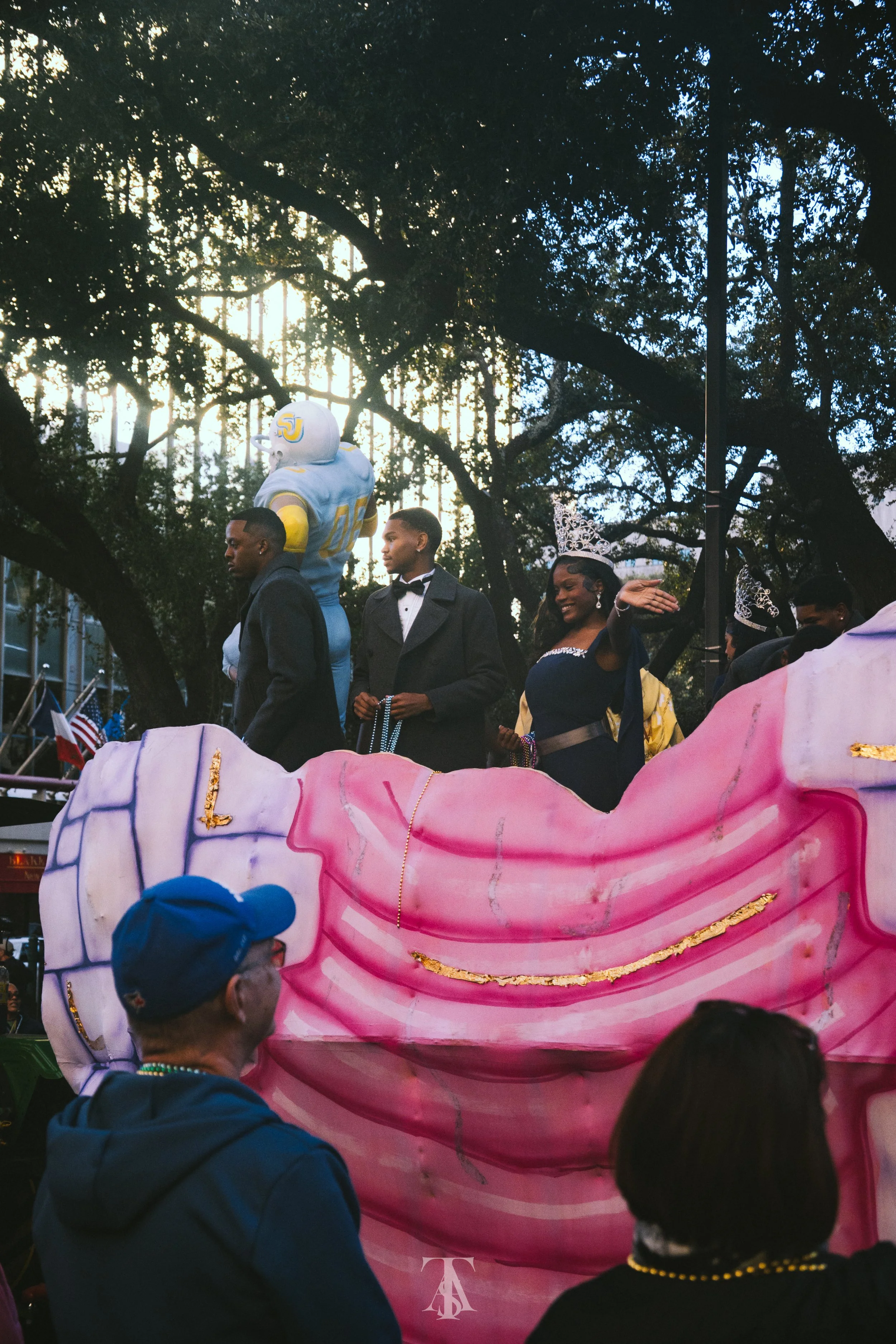
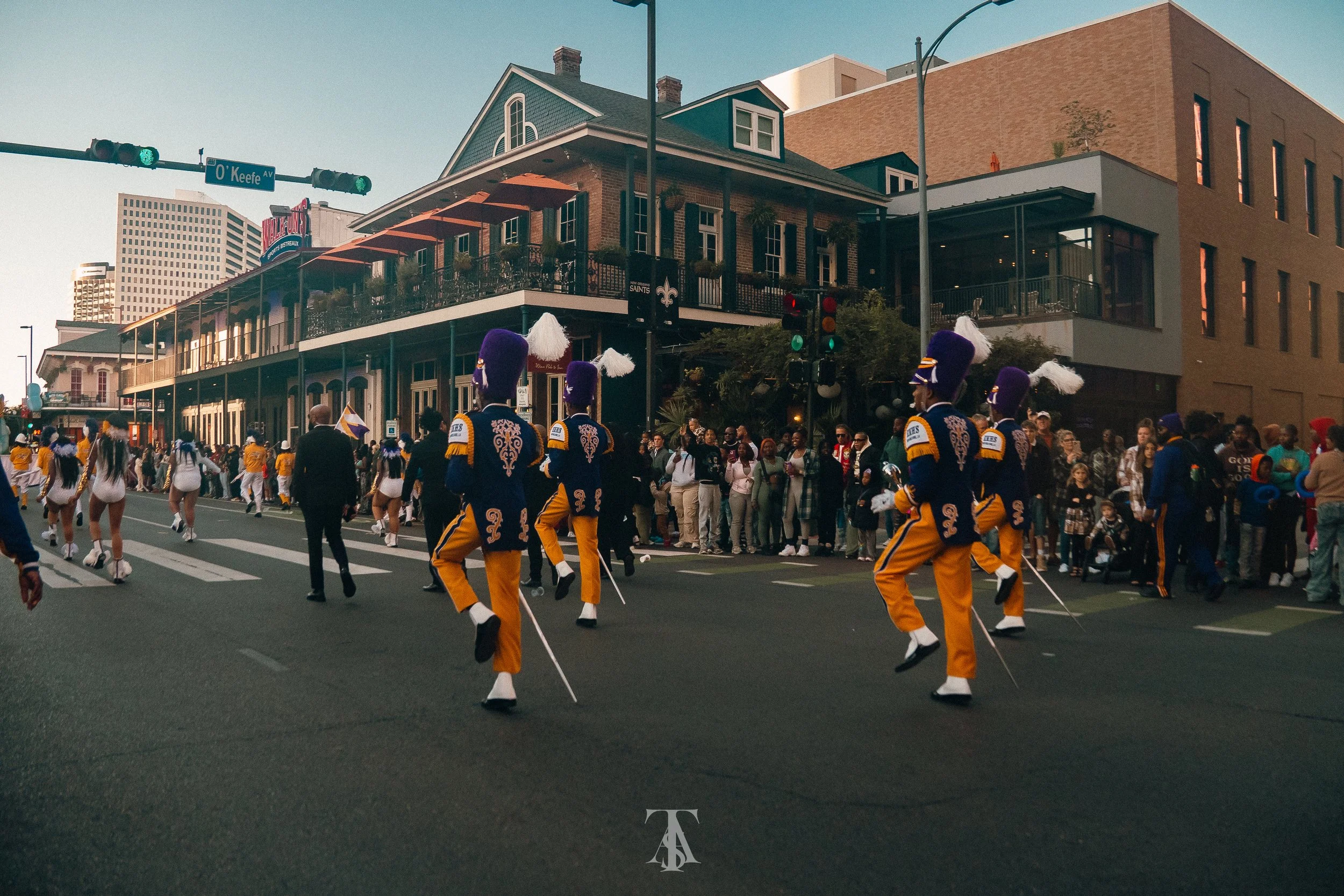
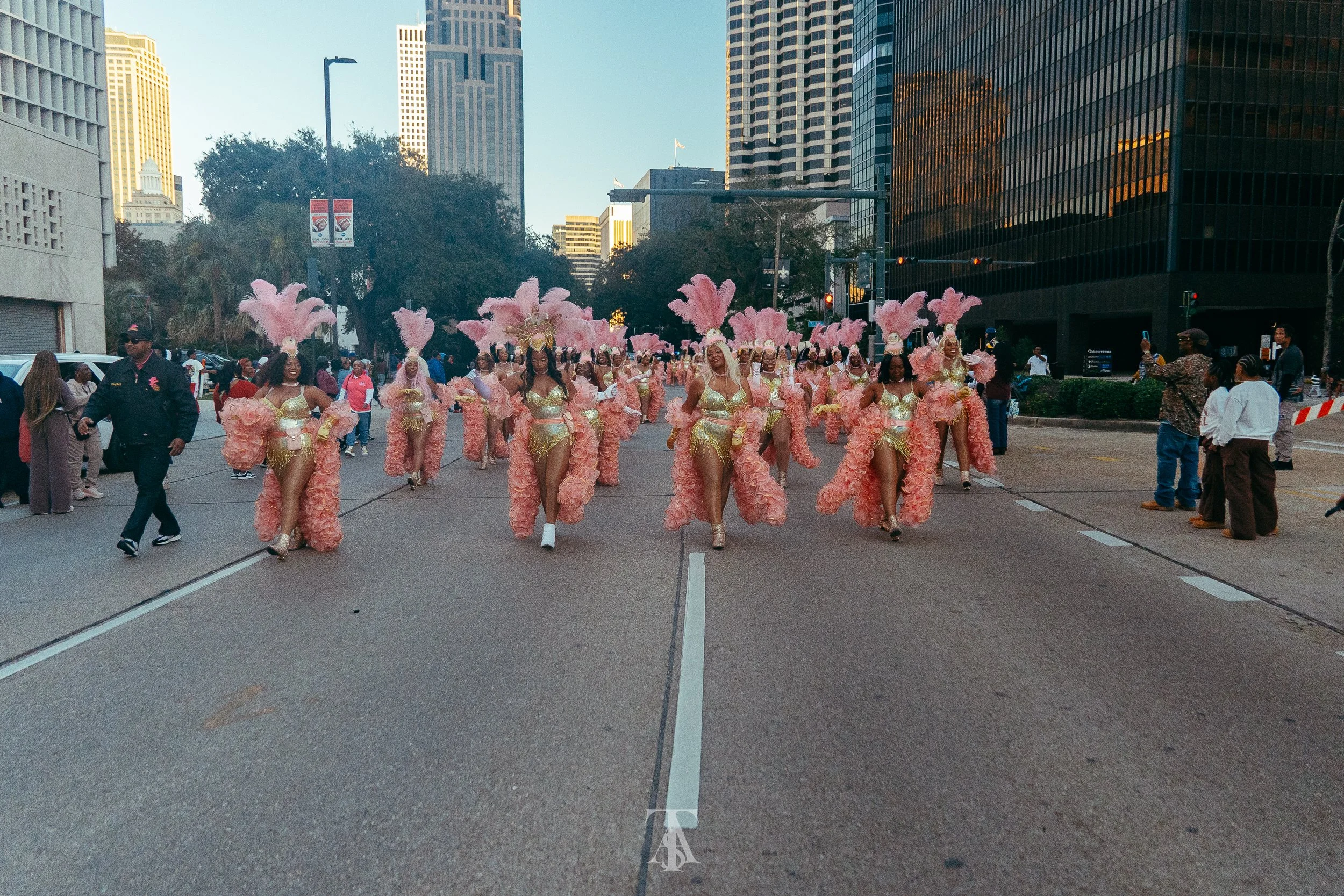
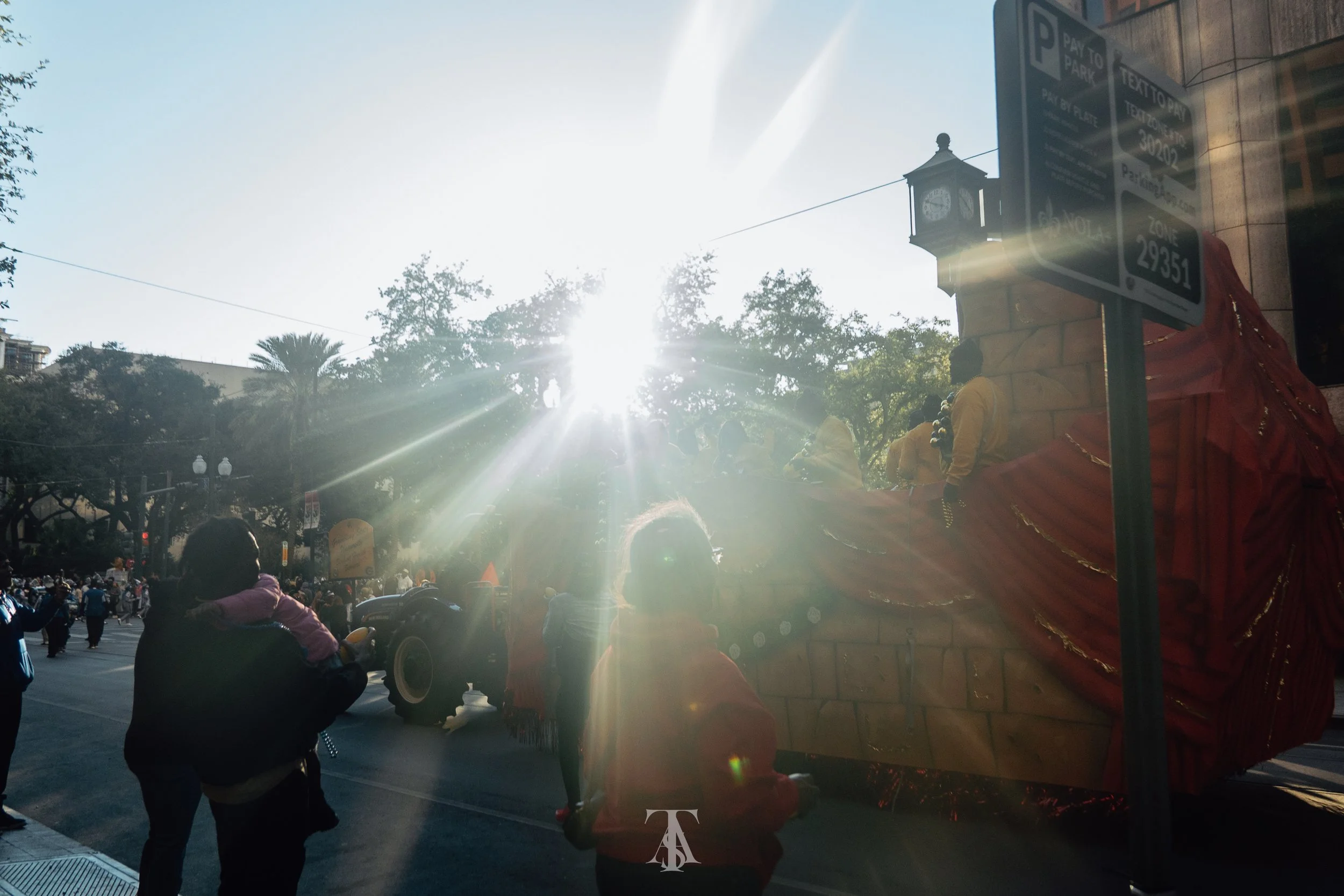
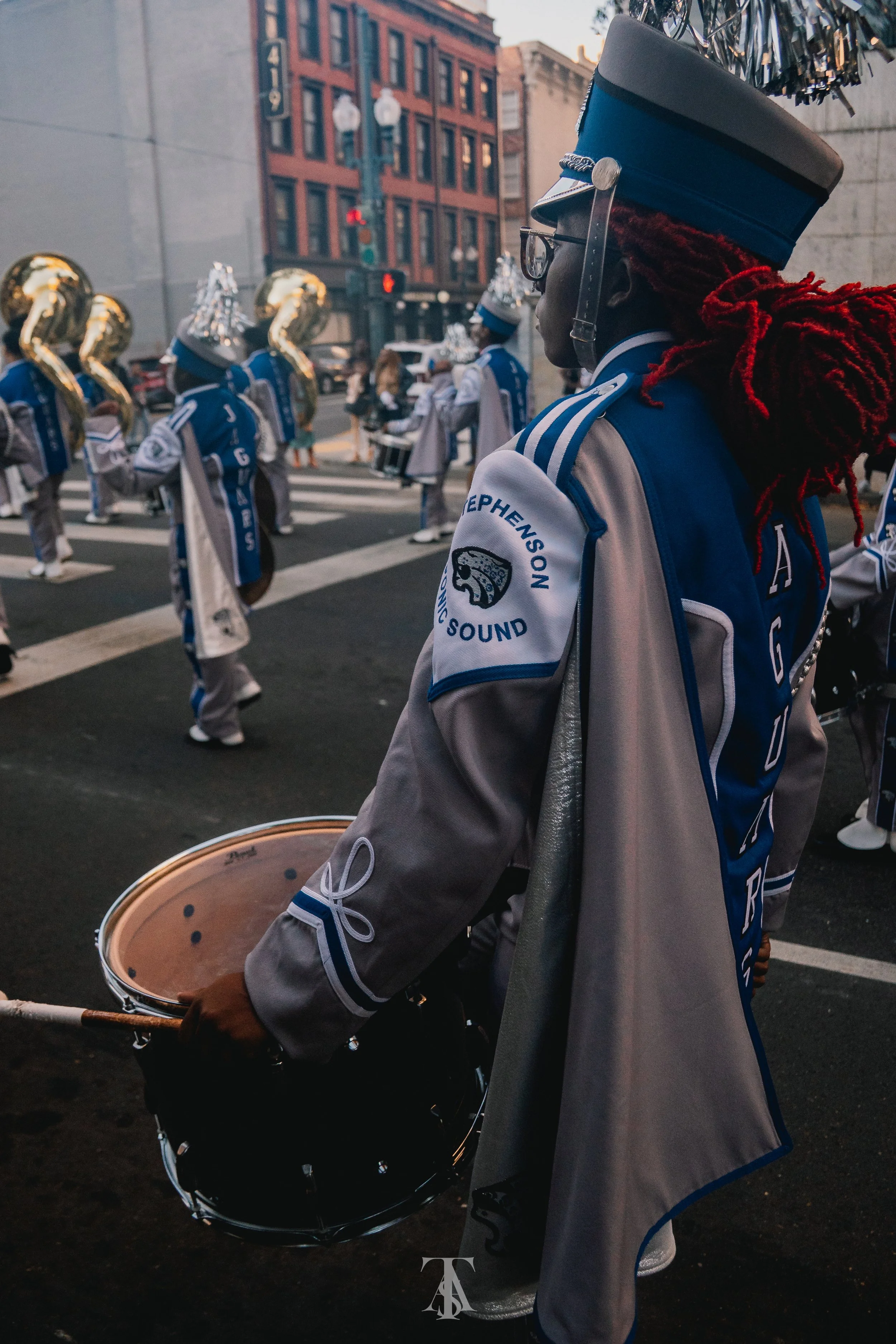
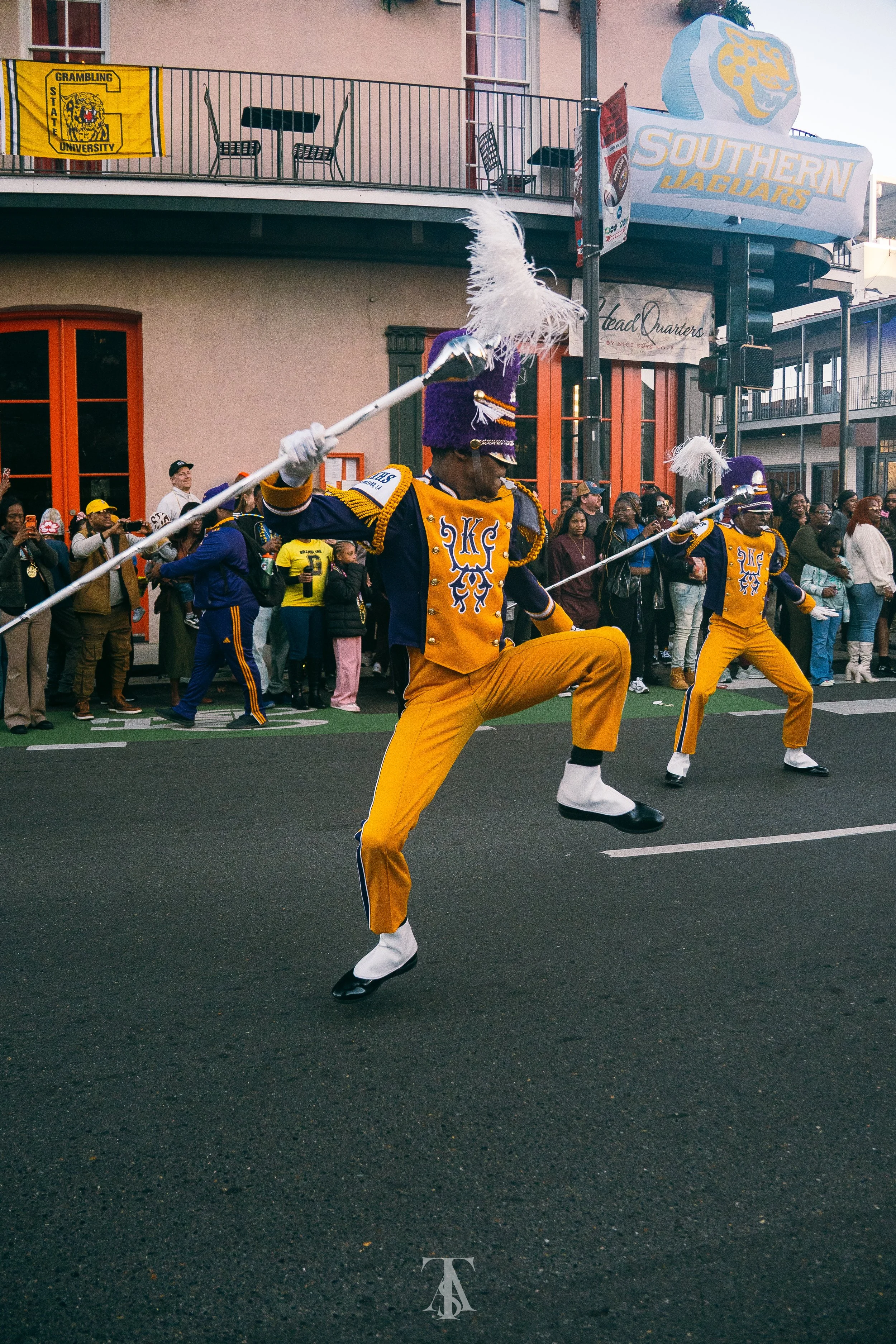
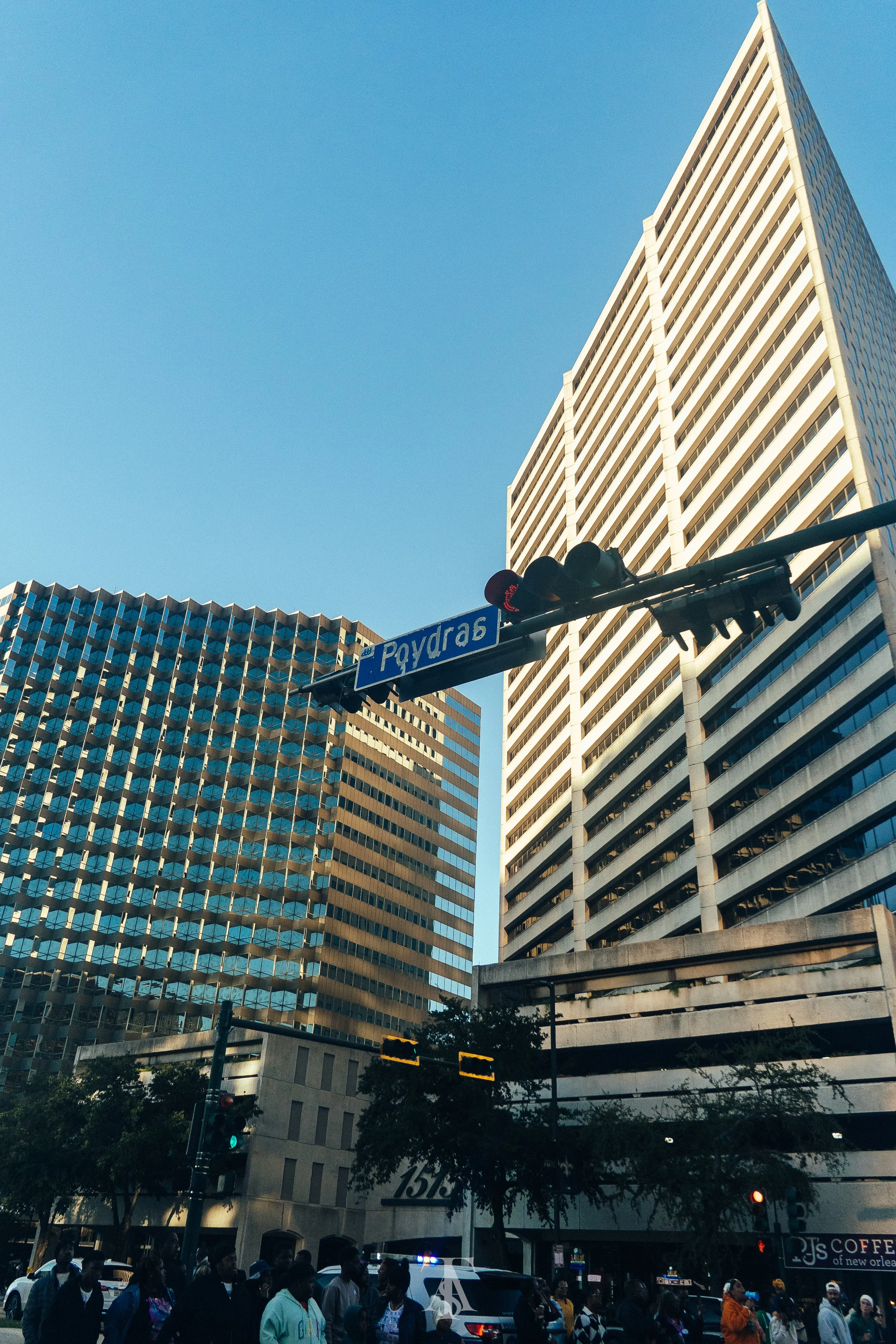
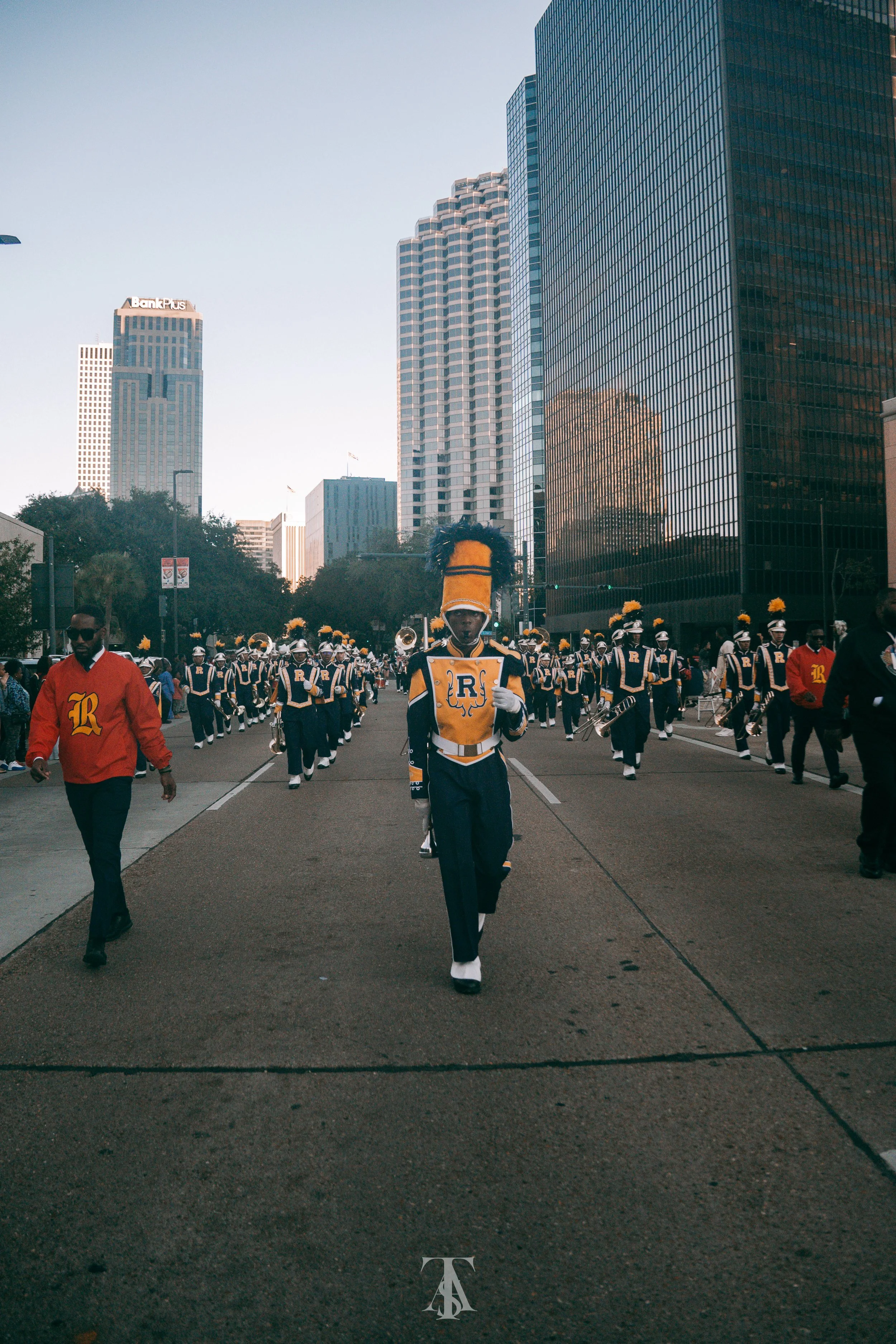
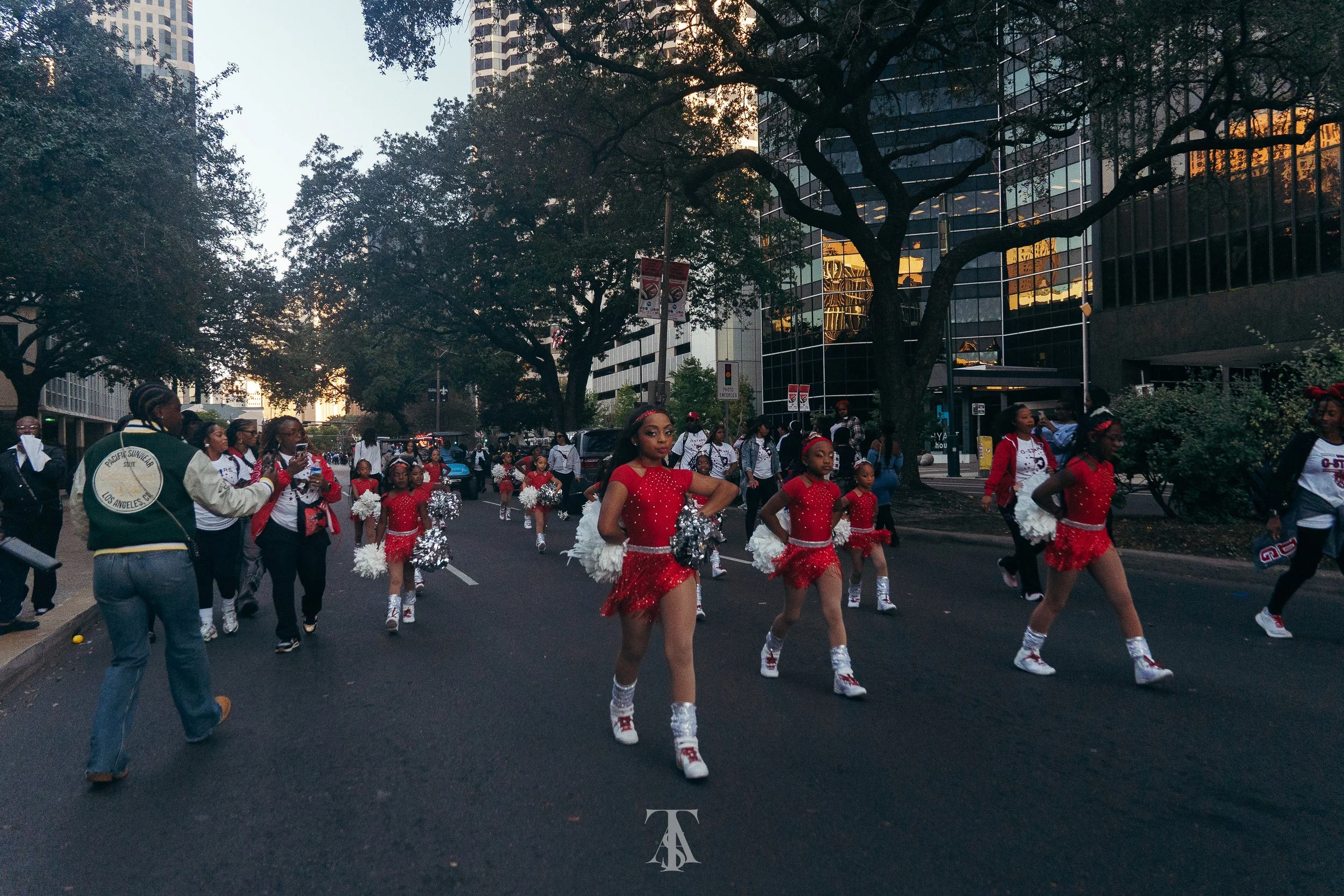
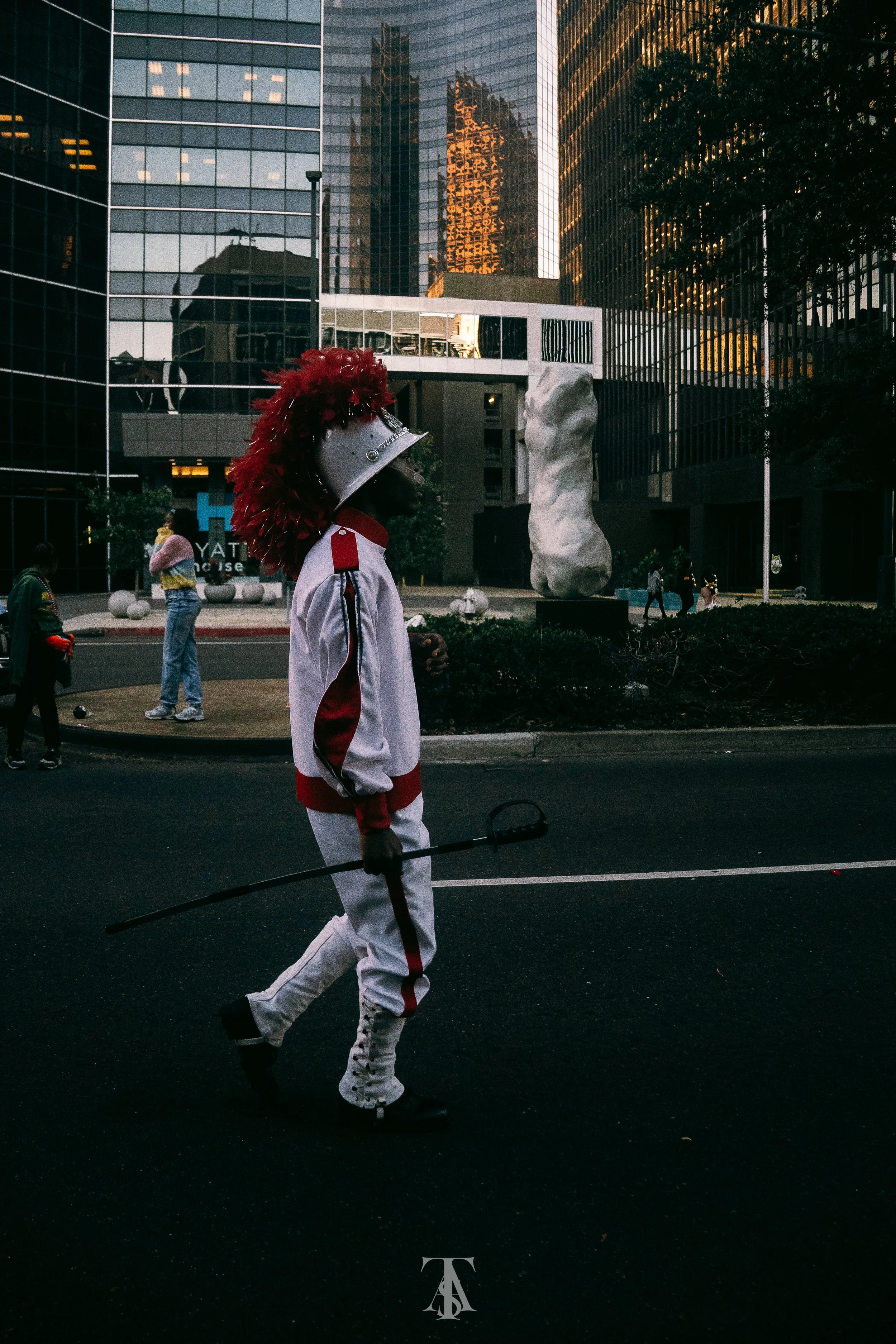
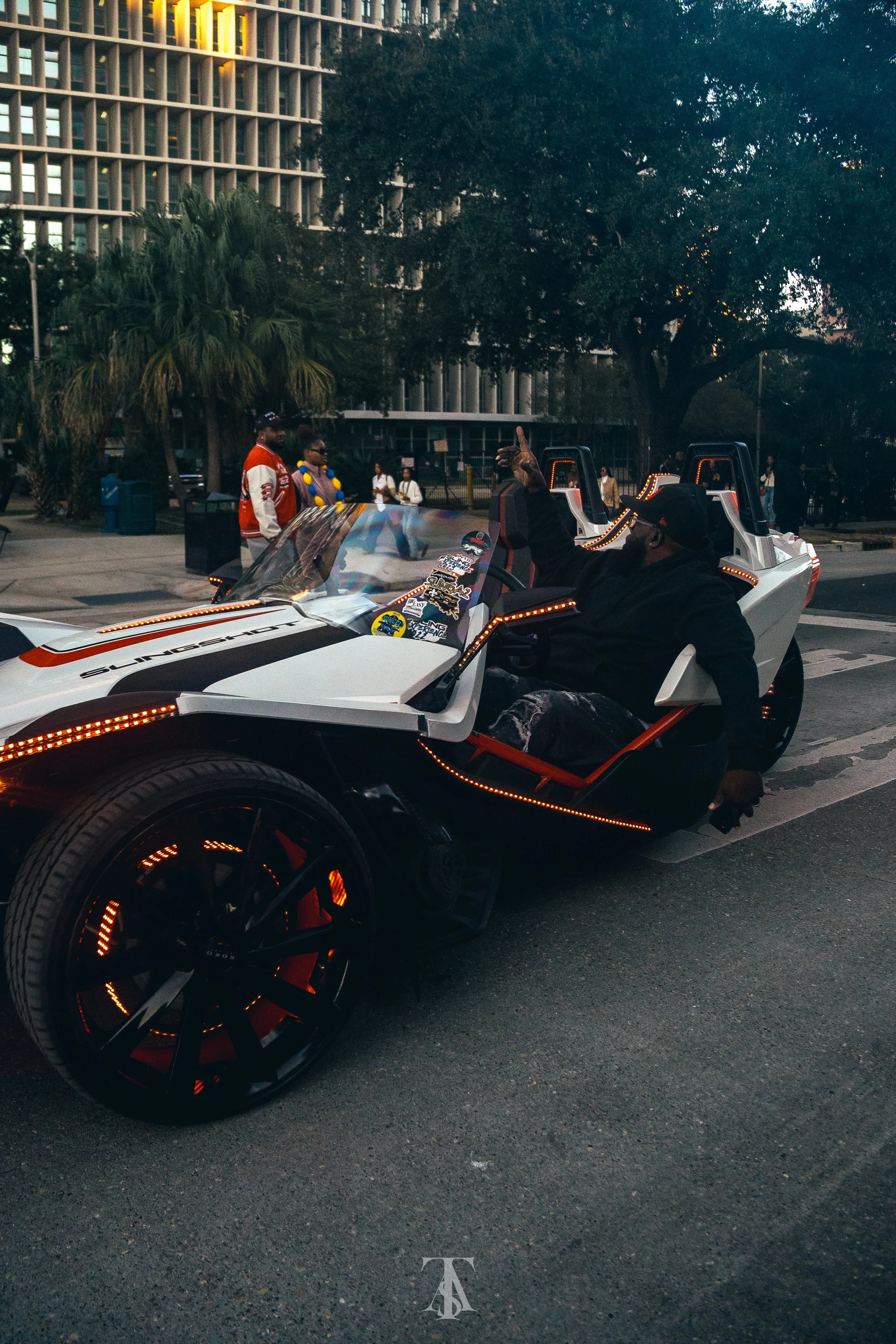
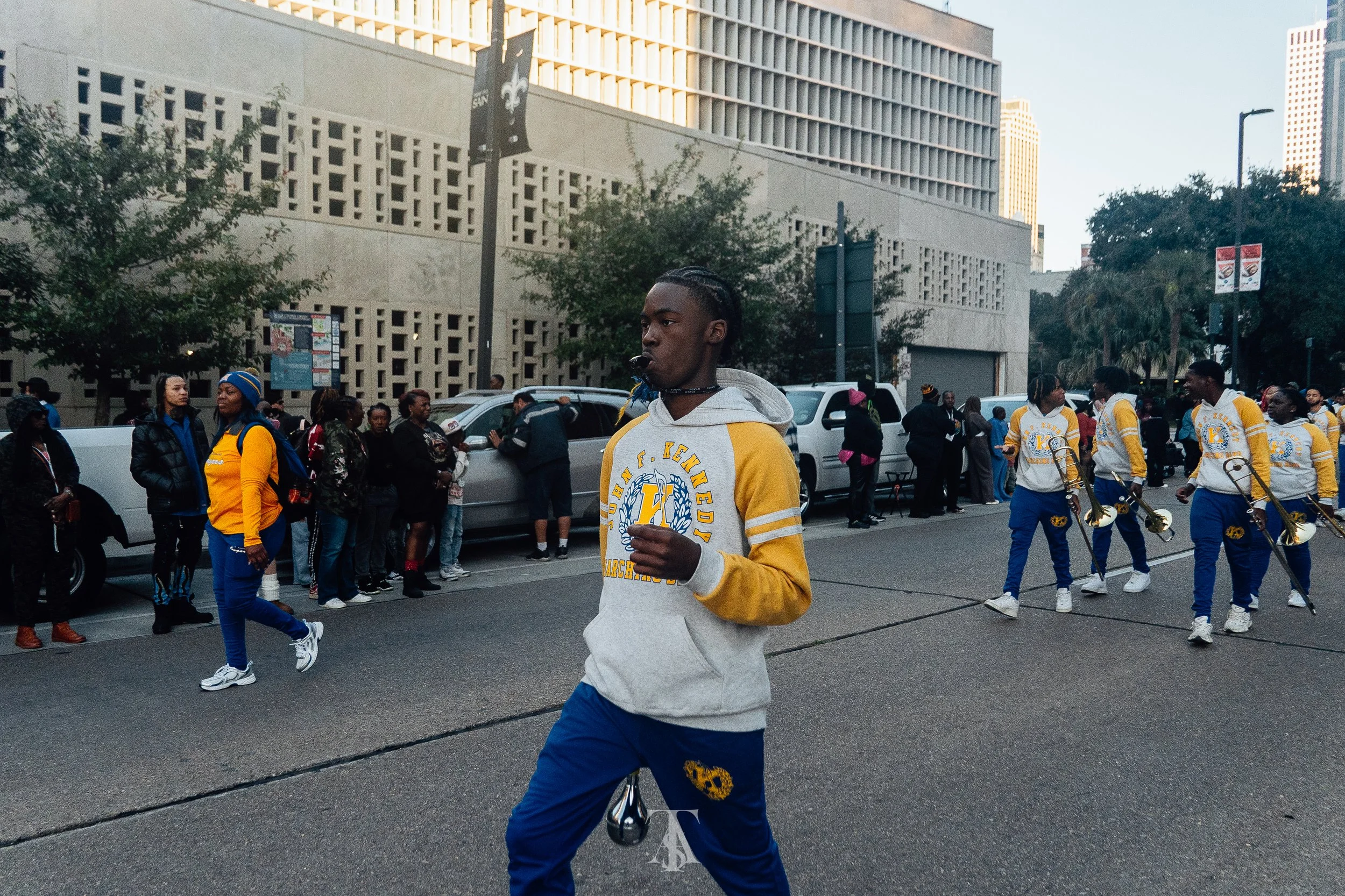
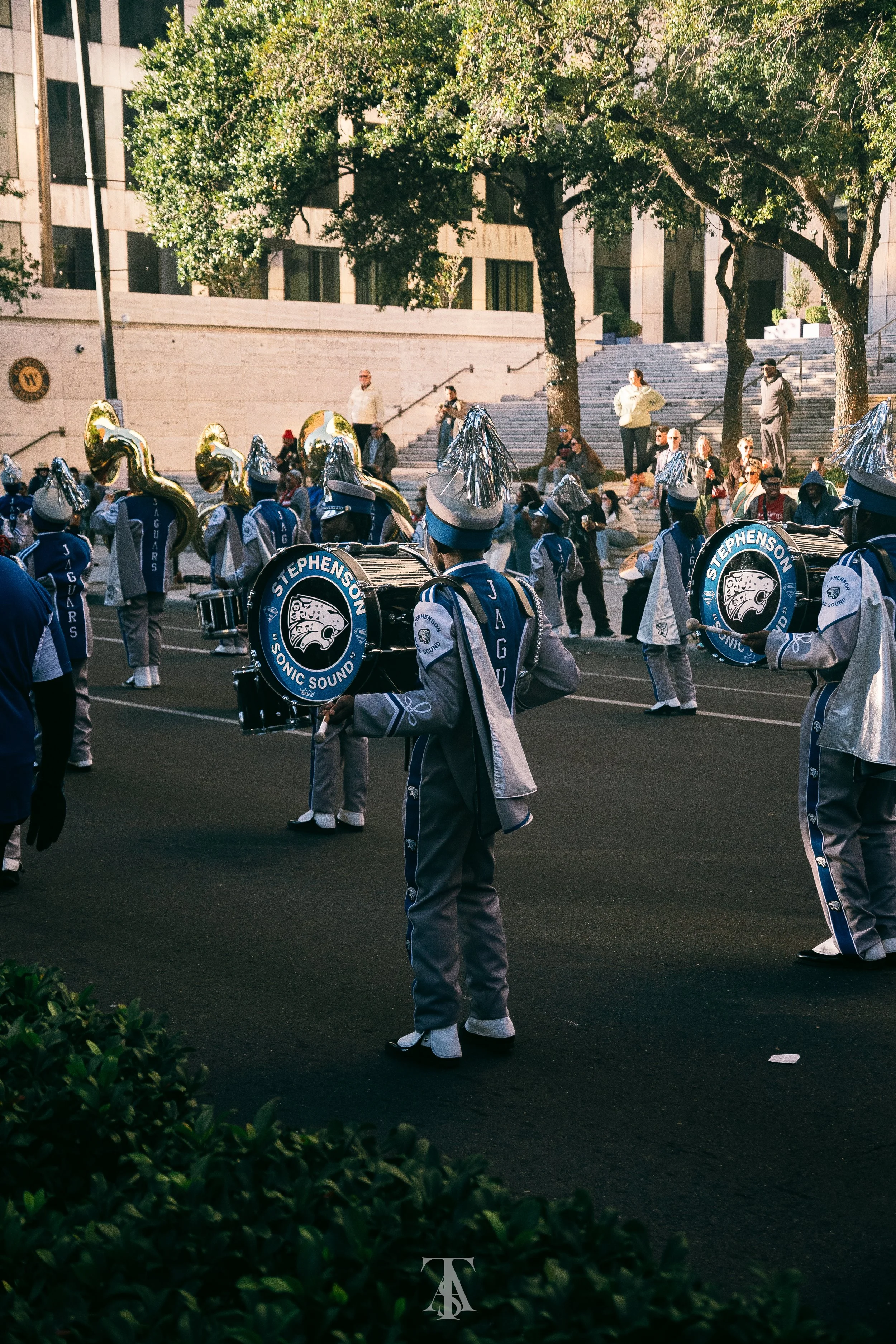
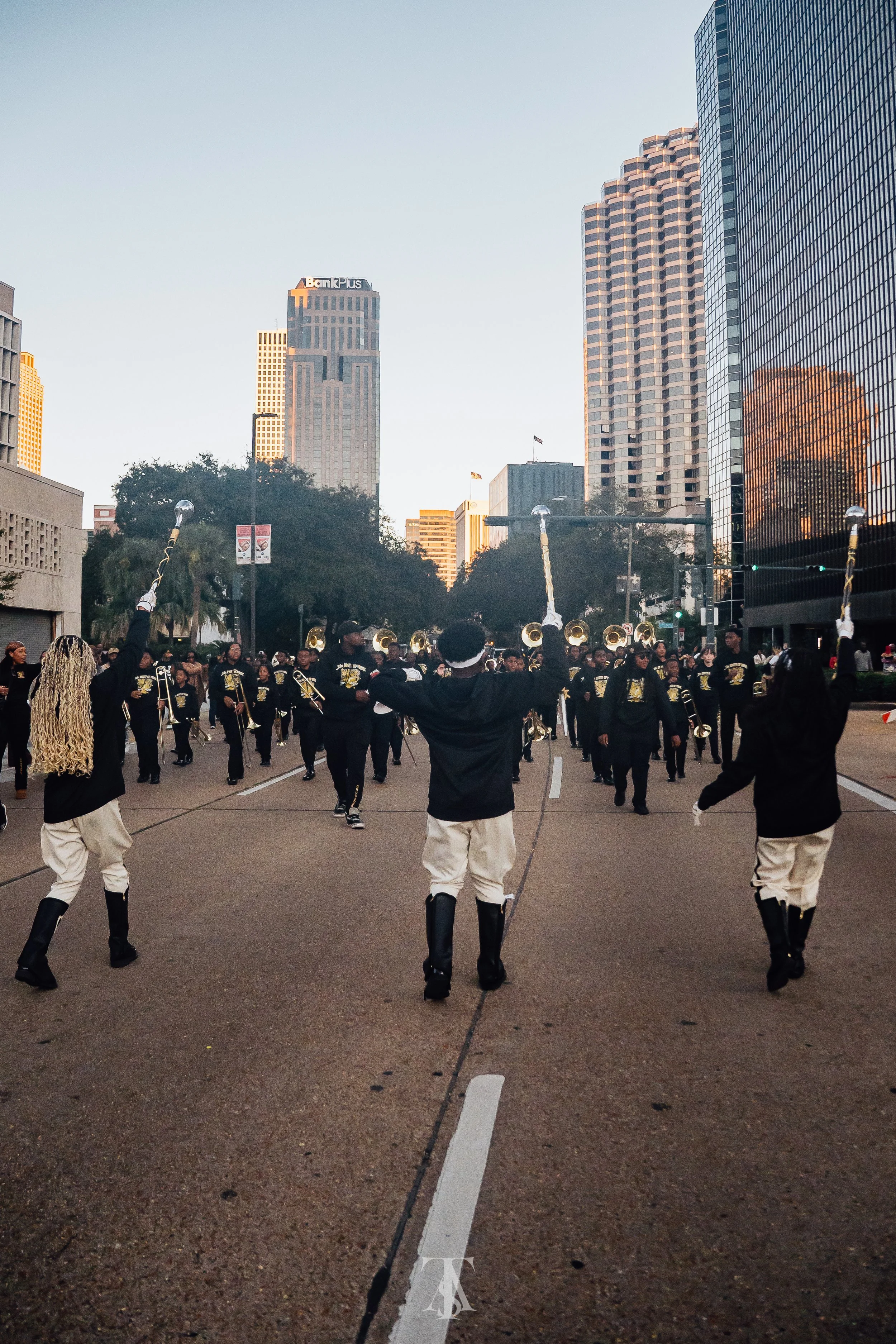
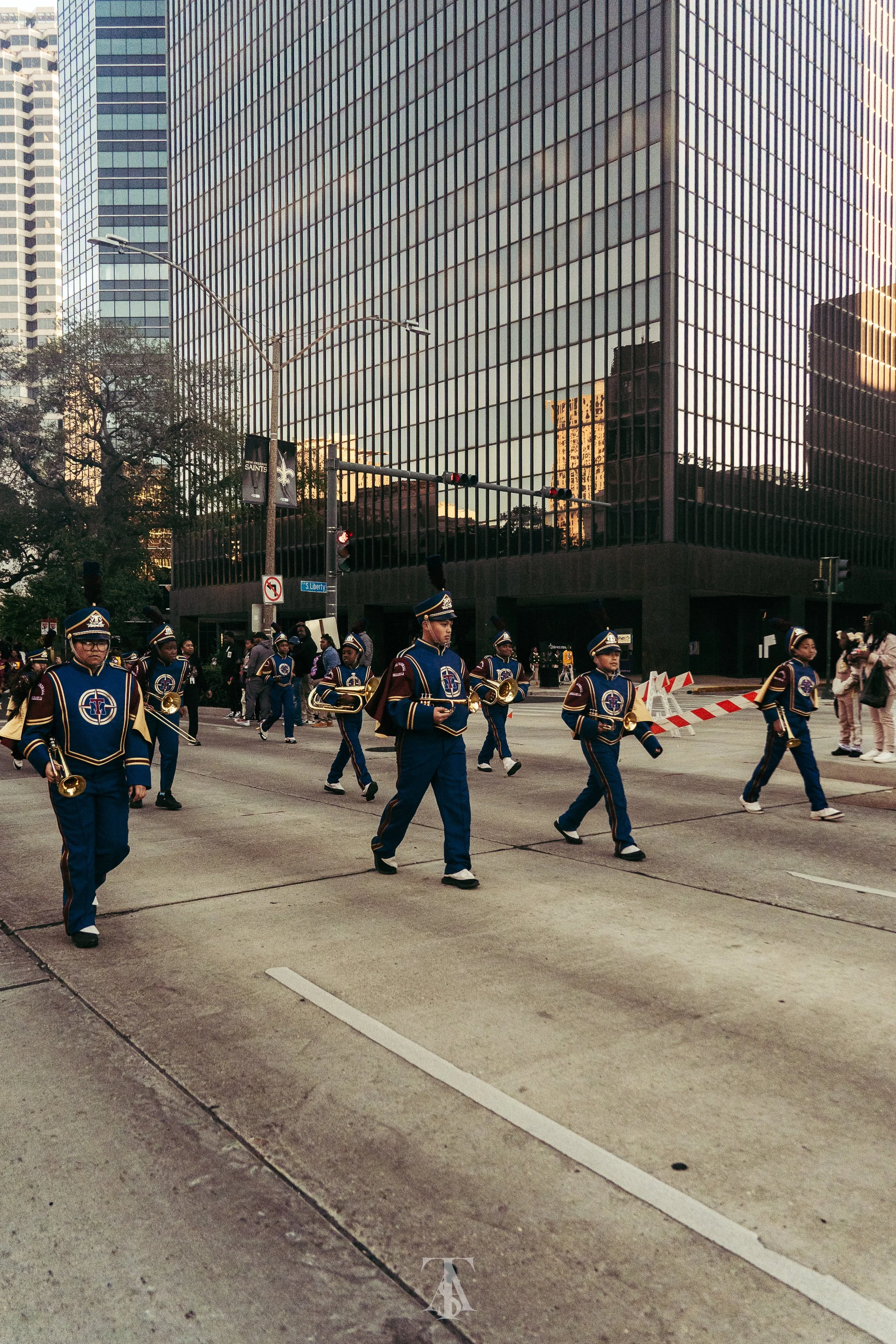
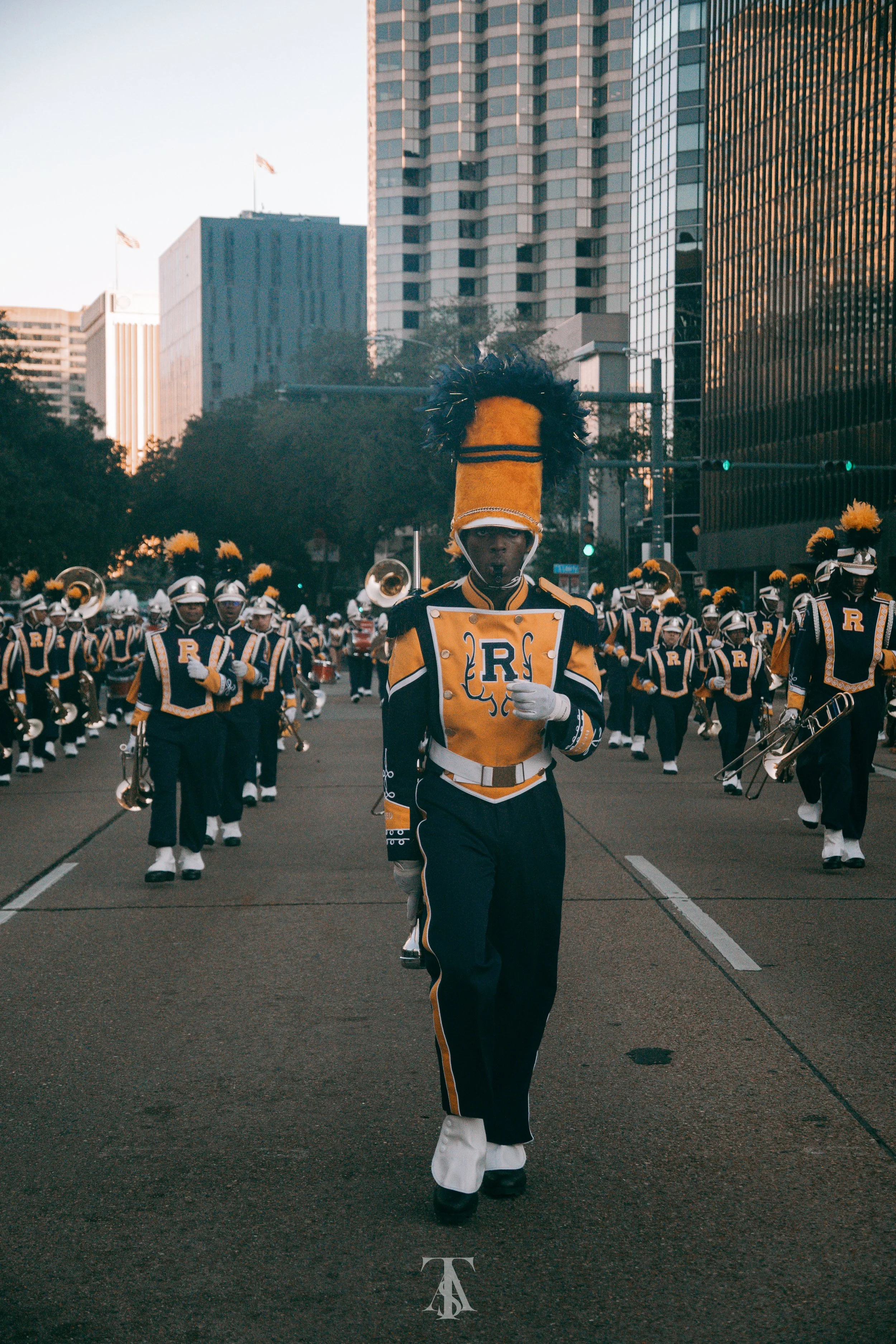
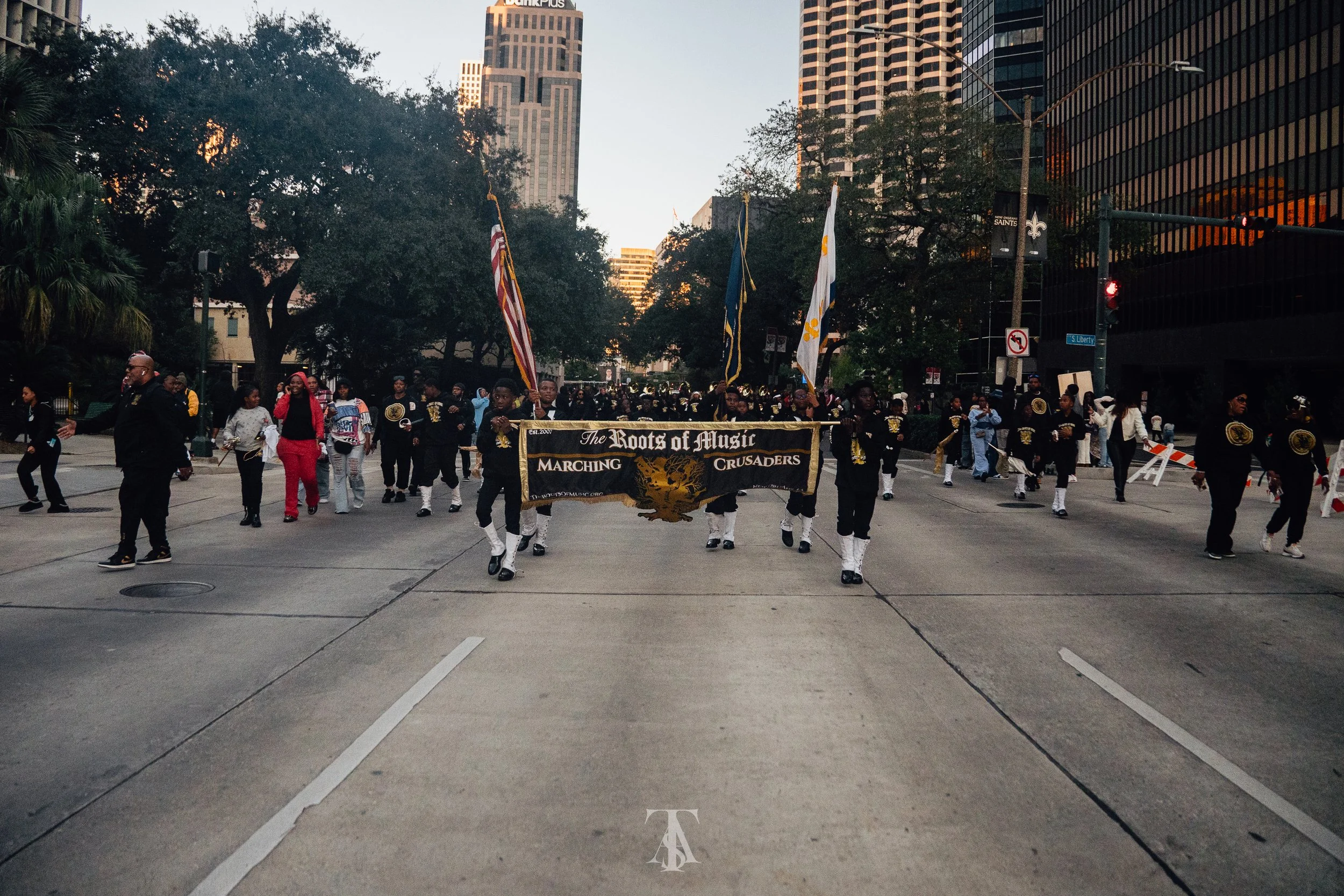

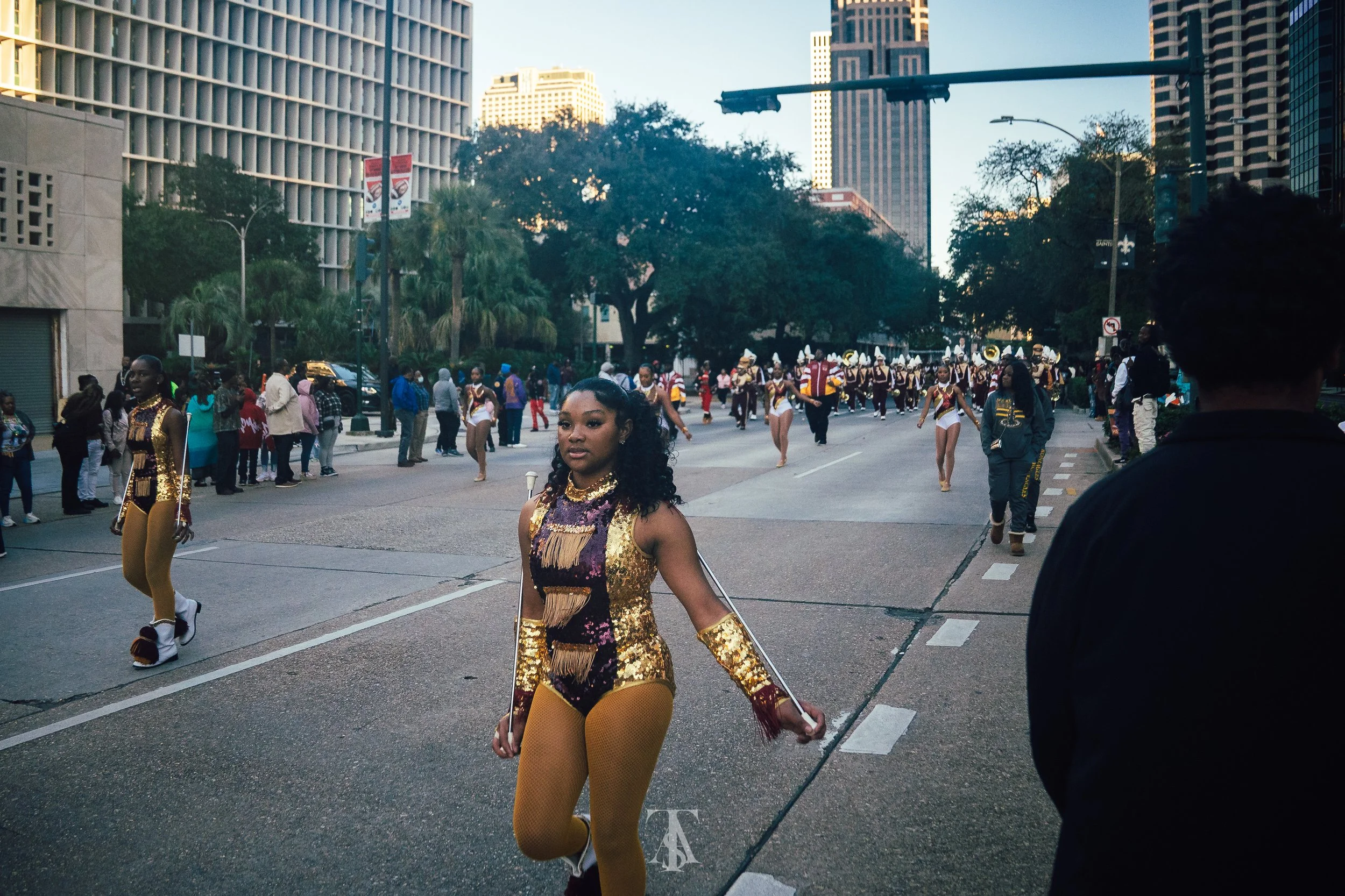
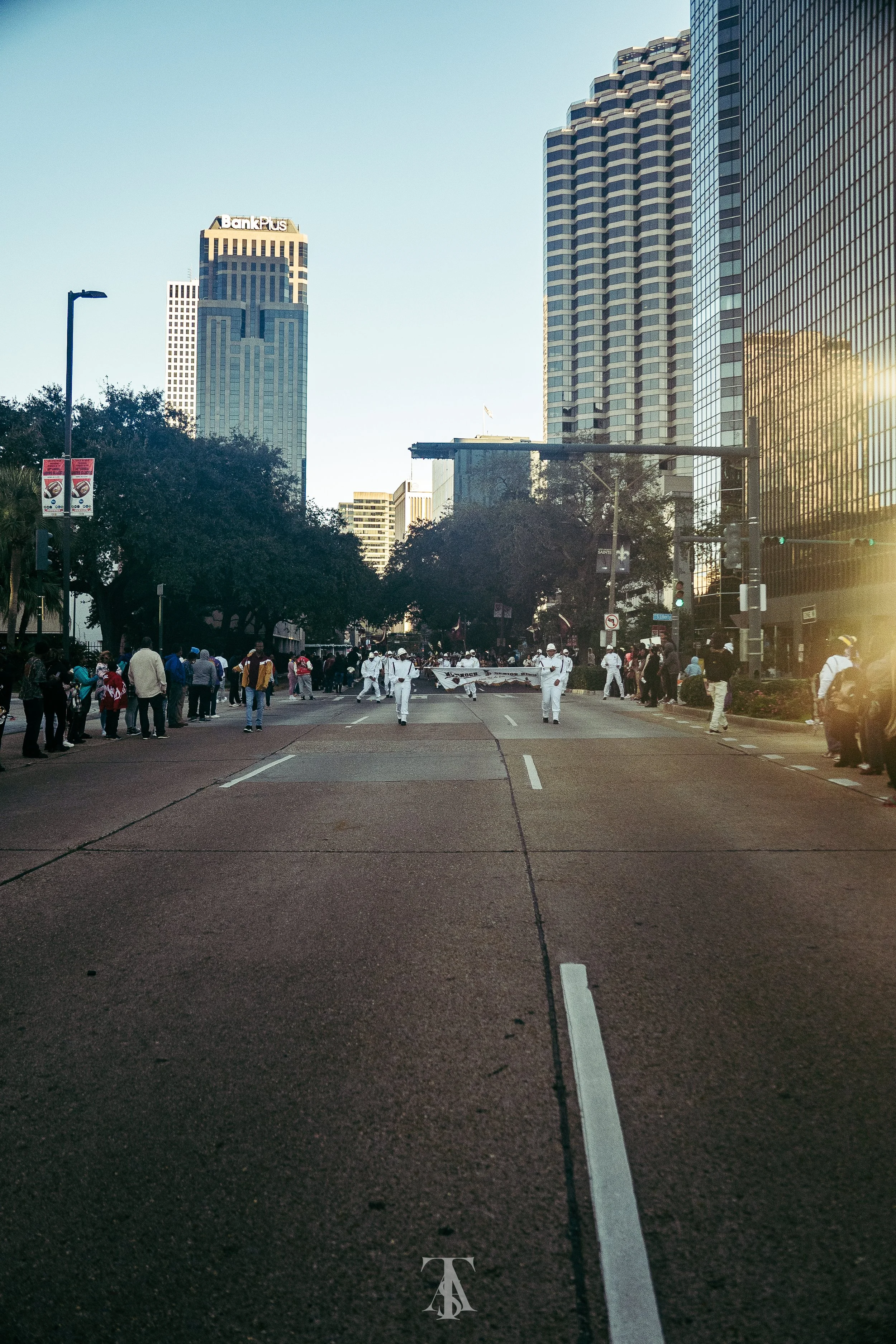
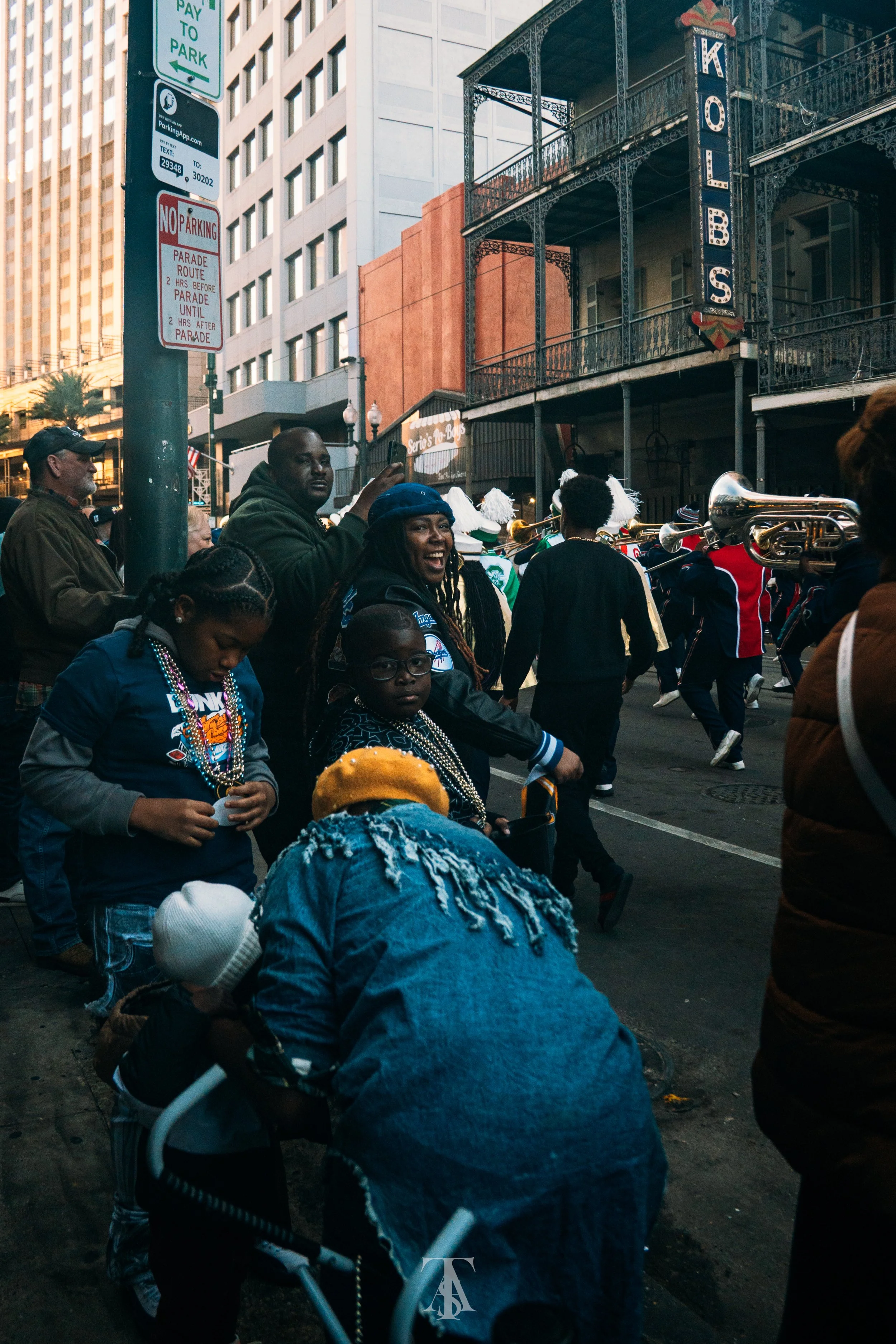
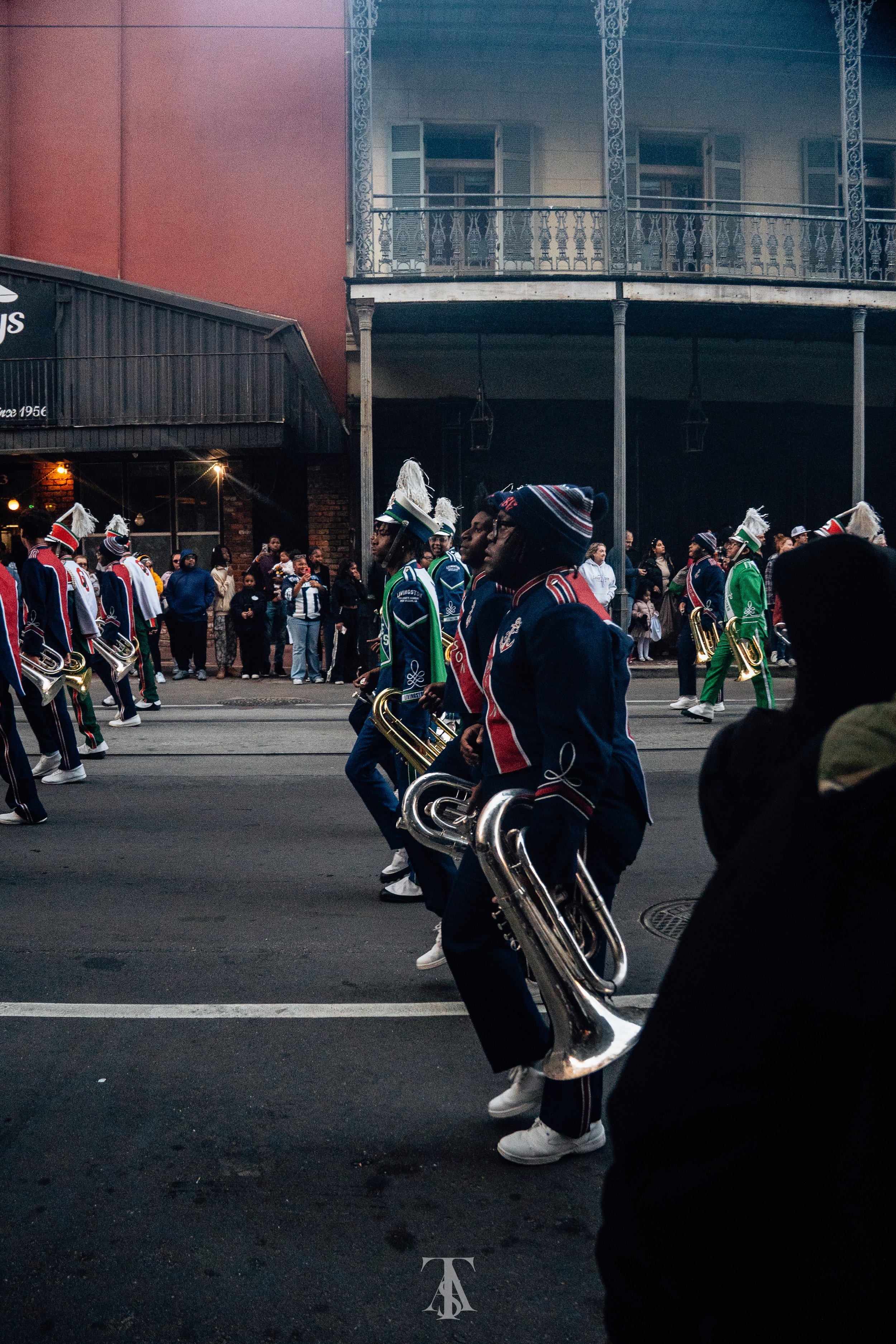
The parade became a living classroom. Elders nodded to rhythms they’ve known all their lives, while the youngest in the crowd danced without hesitation, already absorbing the language of brass and drum. The Bayou Classic isn’t just an event it’s a ritual of pride, a reminder that culture is alive because it is played, marched, and shouted into the streets.
Through the lens, I caught fragments of that energy: a trumpet player’s cheeks puffed with determination, a drumline locked in perfect sync, a flag twirler carving arcs of color against the sky. Each photo is a heartbeat, proof that the future of New Orleans music is already here, marching in step.
The Bayou Classic Parade is more than spectacle. It’s a promise that as long as there are young musicians willing to carry the horn, the drum, the rhythm, New Orleans will never lose its sound.