
THE OUTPOST
VISUAL ESSAYS
Explores stories told through imagery sequences, moments, and compositions that speak where words fall short. These essays reveal the emotional and atmospheric layers of a scene, capturing meaning through light, texture, and perspective. Each piece invites the viewer to slow down and experience the world visually, one frame at a time. This is where storytelling becomes a study in seeing.
Visual Essays are the cinematic core of The Outpost a space where images carry the weight of narrative. These pieces are built from observation, intention, and the quiet discipline of looking closely. They document the world not through explanation, but through presence, allowing each frame to reveal something essential about the moment it captures. In this section, the camera becomes both witness and interpreter.
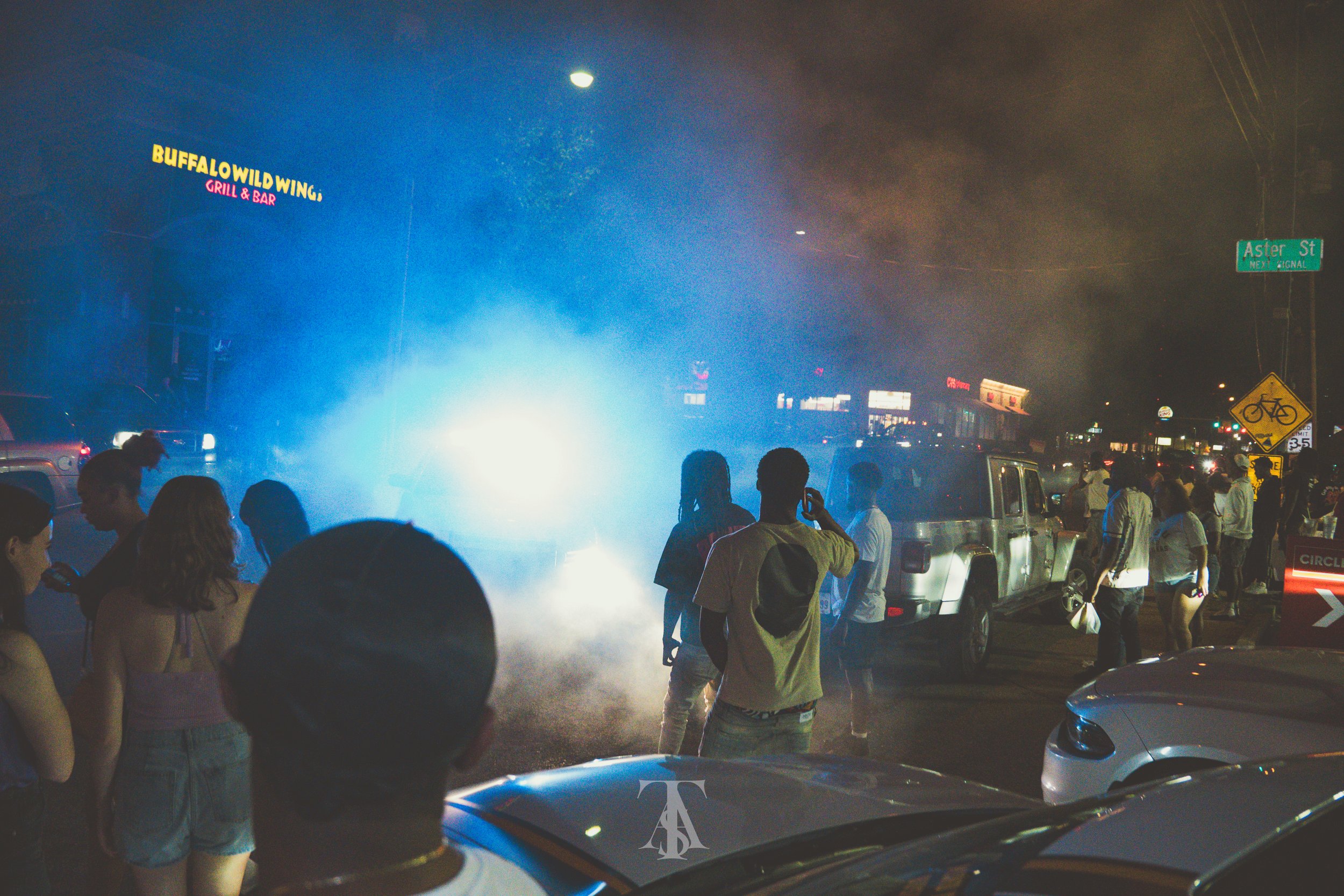
Every visual essay begins with a question: What does this moment feel like? The answer is found in the details the way light falls across a street, the tension in a gesture, the rhythm of a crowd, the stillness of a room. These images hold emotional truth without needing to name it. They invite the viewer to step inside the scene and experience it from within, rather than observing from a distance.
Visual storytelling is its own language, shaped by composition, color, movement, and silence. It allows meaning to emerge slowly, frame by frame, without forcing a conclusion. The Outpost approaches these essays with care, honoring the subtlety of visual narrative and the power of imagery to communicate what words cannot. Each sequence becomes a meditation on place, identity, and the lived moment.
These essays also serve as a record of the world as it shifts. They capture the textures of community life, the evolution of culture, and the fleeting moments that define a day, a season, or a generation. Through visual documentation, The Outpost preserves the atmosphere of a time and place not as nostalgia, but as evidence of how people move through their environments.
In a world saturated with images, Visual Essays offer something different: intention. They are not snapshots or quick impressions, but crafted narratives built from patience and attention. They remind us that seeing is an act of understanding, and that the camera can reveal truths that often go unnoticed. These essays ask the viewer to slow down, to breathe, and to let the story unfold at its own pace.
As you explore these visual narratives, consider them an invitation to look deeper to see beyond the surface and into the emotional landscape of each moment. The Outpost is here to document the world through imagery that carries meaning, memory, and presence. Each essay adds another layer to the archive, expanding the story of who we are and how we see.
The Bayou Classic Parade is more than music in motion — it’s the heartbeat of New Orleans carried by its high school marching bands. Brass lifted like prayers, drums thundered like memory, and every step became a story of pride and tradition.